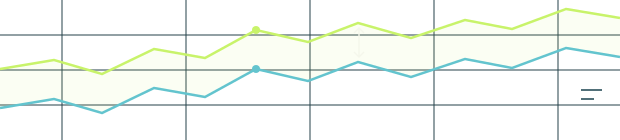
A futures spread combines a long position in one futures contract with a short position in a related contract. The trade focuses on how their prices move relative to each other, rather than simply whether a market rises or falls. The contracts might cover different delivery months, different commodities or related financial markets, as outlined in CME Group’s futures spread overview.
The attraction is straightforward: you can express a view on a price relationship without taking the same exposure as an outright futures position. But two opposing positions do not automatically make a safe trade. Contract sizing, execution, margin and expiration still matter.
Futures Spreads Are Not Bid–Ask Spreads
The word “spread” does two different jobs in trading. A futures spread is a position involving related contracts. A bid–ask spread is the gap between the prices available to buyers and sellers.
Suppose you buy July wheat futures and sell December wheat futures. Those two positions form a calendar spread. Each contract also has its own bid and ask, and an exchange-listed July–December spread can have a separate bid and ask for the combined trade.
This distinction separates the strategy from its execution cost. The relationship between July and December prices determines the spread position’s value. The available bid and ask affect the price at which you can enter or exit.
A futures spread also differs from an options spread. Buying and selling futures does not create the fixed maximum loss associated with some options structures. Posting margin is not the same as paying an option premium.
How Futures Spread Prices Work
Start by writing down the subtraction used to quote the spread. For a simple relationship defined as contract A minus contract B:
Spread price = Price of A − Price of B
Under this convention, buying the spread means buying A and selling B. The position benefits when A strengthens relative to B, whether that happens because A rises faster, falls more slowly, or moves higher while B falls.
Selling the spread reverses the position: sell A and buy B. It benefits when A weakens relative to B.
Do not assume every trading screen follows the same convention. Calendar spreads may use nearby minus deferred prices, while interproduct strategies can have exceptions. ICE Futures Europe’s strategy conventions set out the subtraction order for its listed strategies, including an exception for its Brent/WTI spread.
Negative Prices Do Not Mean Negative Profits
If A trades at 72.00 and B at 73.00, A minus B equals −1.00. A buyer profits if that spread rises to −0.40, before costs. The spread remains negative, but its value has increased by 0.60.
Words such as “widening” and “narrowing” can cause confusion here. A move from −1.00 to −1.50 increases the absolute distance between the contracts, yet the quoted spread falls. Record the actual subtraction and expected price change instead of relying on those labels alone.
Main Types of Futures Spreads
Calendar Spreads
A calendar spread pairs different expiration months of the same futures product. Buying September corn and selling December corn is one example; reversing those legs expresses the opposite view.
The trade concerns the value of exposure at one date relative to another. Storage costs, financing, seasonal demand and the availability of supply can affect that relationship. The outright corn price can move sharply without producing an equally large change between the two months.
Calendar spreads also serve a practical purpose when rolling an existing position from an expiring contract into a later month. The structure and price drivers are covered further in futures calendar spreads.
Intercommodity and Intermarket Spreads
These spreads pair related but different products. Examples include wheat against corn, one crude oil benchmark against another, or one equity index futures contract against a different index.
The thesis must explain why the purchased market should strengthen relative to the sold market. Saying that two prices “usually move together” is not enough. Their relationship can change because their supply, demand or underlying exposures are different.
Equal contract counts do not necessarily produce balanced exposure. Contract sizes, currencies and price sensitivity may require a different ratio. The intercommodity futures spreads guide examines these relationships and sizing choices.
Processing Spreads
Processing spreads compare a raw material with products made from it. Energy crack spreads link crude oil with refined fuels. Soybean crush spreads link soybeans with soybean meal and soybean oil.
These structures can help commercial businesses manage changes in processing economics. Traders can also use them to take a view on the relationship between input and output prices. However, a quoted processing spread is not a complete business profit calculation: operating expenses and other costs remain outside the futures relationship.
Some processing trades involve more than two legs. Units and contract ratios must match the intended exposure before their prices can be combined meaningfully.
Calculating Futures Spread Profit and Loss
Consider a hypothetical commodity futures contract representing 1,000 units, quoted in dollars per unit. You buy one nearby contract and sell one later contract. Both legs have the same multiplier.
| Position | Entry price | Exit price | Profit or loss |
|---|---|---|---|
| Buy nearby contract | 72.00 | 74.00 | +$2,000 |
| Sell later contract | 73.00 | 74.40 | −$1,400 |
| Nearby minus later spread | −1.00 | −0.40 | +$600 |
The long leg gains 2.00 × 1,000, while the short leg loses 1.40 × 1,000. The combined gain is $600.
The same result follows directly from the spread change:
Gross profit = (Exit spread − Entry spread) × Contract multiplier × Number of spreads
Here, [−0.40 − (−1.00)] × 1,000 × 1 = $600.
This shortcut applies to the matched, equal-multiplier structure in the example. If the legs have different multipliers, quantities or settlement currencies, calculate each leg separately and combine the results in a common currency.
Both Markets Can Fall and the Spread Can Still Gain
Suppose the nearby contract instead falls from 72.00 to 70.00, while the later contract falls from 73.00 to 70.40. The long leg loses $2,000, but the short leg gains $2,600. The spread still earns $600 before costs.
The nearby contract has outperformed the later contract by falling less. That relative performance, not the market’s direction alone, determines the result.
The reverse also applies. Both contracts can rise while a long spread loses money if the short leg rises more than the long leg.
Trading Costs Apply to Both Legs
A spread’s quoted price difference is not an upfront purchase price. Nor does a small quoted difference imply a small dollar exposure.
Opening and closing a simple two-leg spread involves four contract sides: two at entry and two at exit. If hypothetical commissions and exchange charges total $3 per contract side, the round trip costs $12 before execution losses or other account charges.
In the example above, that would reduce the $600 gross gain to $588. Actual charges depend on the product, account and fee schedule.
Also distinguish expected execution prices from actual fills. If a calculation starts with midprices, it has not yet allowed for crossing the market or adverse price movement during execution. If it uses actual fills, those execution effects are already reflected in the trading result; do not subtract them twice.
Executing a Spread Order Versus Trading Separate Legs
Where supported, an exchange-listed spread order lets you trade the relationship at a combined price. Instead of submitting unrelated orders for each contract, you submit an order for the spread itself.
This can avoid the risk of establishing one leg while the other remains unfilled. Exchange functionality matters: ICE’s futures implied pricing documentation confirms that its executable implied spread prices can trade without legging risk.
Do not assume every platform’s “spread” ticket works that way. Check whether it sends an exchange-supported strategy order or manages separate orders through software. A combined display does not, by itself, prove simultaneous execution.
Submitting separate legs creates legging risk. If you buy A but cannot sell B at the expected price, you temporarily hold an outright long position. The market may move before you complete the intended trade.
A spread limit order controls the acceptable combined execution price, but it does not guarantee a fill. Review the spread’s available size and trading activity rather than assuming that busy outright contracts guarantee an equally liquid spread.
When closing, reverse every open leg in the correct quantity. Closing only the profitable leg leaves a different position behind, not a completed spread trade.
Why Spread Margin Can Be Lower
Futures margin is collateral supporting the position, not its purchase price or maximum possible loss. A clearing model may recognize that opposing positions partly offset each other, reducing the required collateral compared with holding the legs separately.
The offset is not perfect. Different contract months can move by different amounts, and related products can diverge. CME Group’s margin FAQ describes both the recognition of spread offsets and the remaining risk between contract expirations.
Check the requirement for the exact products, months and quantities you intend to hold. Also confirm the firm’s account requirement rather than treating an exchange illustration as a live quote.
A lower margin requirement does not make a given dollar loss smaller. If a spread loses $500, it loses $500 regardless of how much collateral was required to open it. Using the margin saving to multiply the position can remove much of the risk reduction that attracted the trader in the first place.
Risks That Opposing Positions Do Not Remove
The Price Relationship Can Move Against You
Related contracts are not interchangeable. A supply disruption, transport constraint or change in demand can affect one leg more than the other. A relationship that looks unusually stretched can move further before reversing, or settle into a different range.
Historical averages are useful context, not repayment promises. A spread is not insurance simply because it contains a short position.
Losses Can Create Cash Demands Before Exit
Futures accounts reflect changes in contract values as positions remain open. A trade that later recovers can still create cash demands along the way. Losses can exceed the initial amount deposited, a risk highlighted in the CFTC’s futures trading risk guidance.
Plan for adverse movement and changing collateral needs, not just the expected outcome. A forecast can be right eventually and still fail as a funded trade.
Expiration Must Be Managed for Each Contract
Different delivery months have different deadlines. Holding an opposing contract in a later month does not cancel the nearby contract’s settlement terms.
Check each leg’s last trading day, settlement method and any applicable delivery notice dates. Confirm the firm’s holding restrictions before entering the position. If you roll one leg rather than closing the whole trade, reassess the resulting exposure and costs.
What to Check Before Opening a Futures Spread
A workable trade plan should answer four questions:
- What relationship are you trading? Record both contracts, expiration months, quantities and the quotation convention.
- Why should it change? Identify the expected driver and what would invalidate the thesis.
- What does an adverse move cost? Convert spread movement into money, then allow for fees and imperfect execution.
- How will you exit? Set the intended closing method, review date and expiration deadline for each leg.
Position size should follow that assessment, not the smallest deposit the order ticket permits. The guide to futures spread margin and risk develops the funding and exposure calculations further.
Futures spreads provide a way to trade relative value. Their usefulness depends on matching the structure to the price relationship you expect to change, then managing both contracts as one position without forgetting that each still carries its own risks.